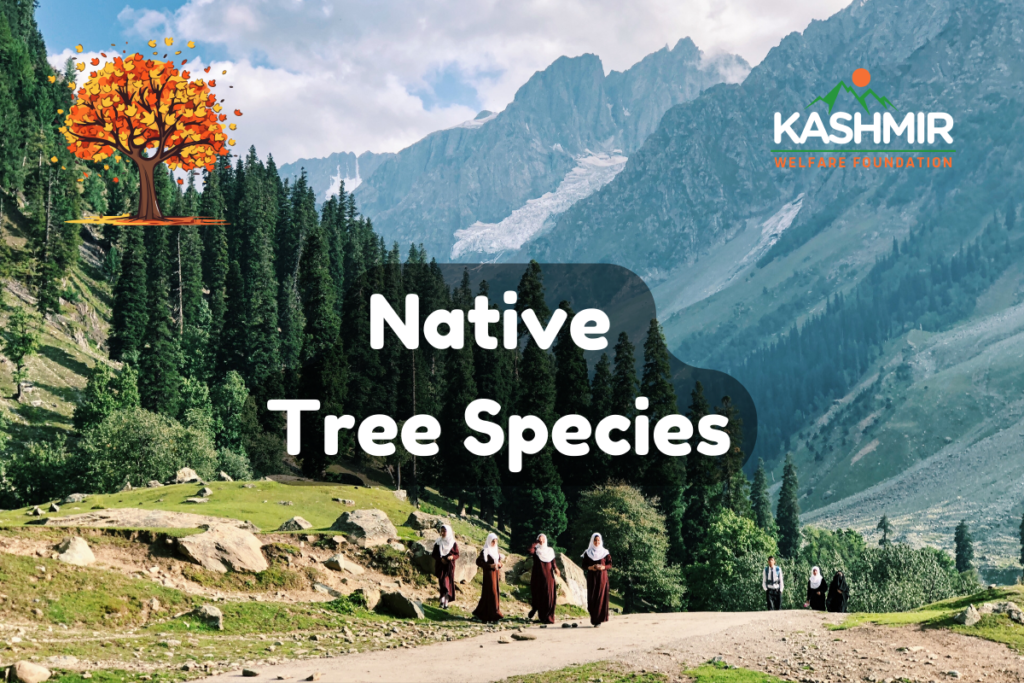
Native Trees of Azad Kashmir – 1 Million Trees Plantation
The Soul of Kashmir: Why Native Trees Matter
From the misty peaks of Neelum to the tranquil valleys of Bagh, Azad Kashmir’s forests whisper stories older than empires. The Deodar, Chir Pine, and Himalayan Blue Pine — all native tree species — are more than mere vegetation. They are living guardians of the region’s ecology, heritage, and identity.
For centuries, these native trees have shaped the rhythm of life in Azad Kashmir. The Deodar (Cedrus deodara), known locally as the “wood of the gods,” stands tall and proud, symbolising endurance and faith. Its deep roots bind the soil, preventing landslides and preserving watersheds that feed the streams of the Jhelum and Neelum rivers.
The Chir Pine (Pinus roxburghii) thrives across the lower slopes, resilient against rocky soils and intense sun. Its long needles fall gently to the ground, enriching the soil and nurturing the next generation of life. The Himalayan Blue Pine (Pinus wallichiana), with its striking bluish hue, paints the temperate slopes and valleys with beauty unmatched elsewhere in South Asia.
Each of these species has evolved over millennia, forming intricate relationships with the region’s flora, fauna, and climate. They stabilise soil, regulate water cycles, and offer food and shelter to countless species. In short, they keep Kashmir alive.
Scientific data underscores the magnitude of what’s at stake. According to the AJK Bureau of Statistics (2024), forests cover 42.63% of Azad Kashmir’s total area, one of the highest forest coverage rates in Pakistan. This makes the region not just a biodiversity haven, but also a crucial carbon sink.
Native trees play a vital role in:
Preventing soil erosion: Deep-rooted species like Deodar strengthen mountain slopes, reducing the devastating landslides that plague districts like Neelum and Muzaffarabad.
Supporting the water cycle: Trees regulate rainfall infiltration and sustain streams during dry seasons.
Enhancing biodiversity: Native trees provide food, shade, and habitat for birds, insects, and mammals that depend on them exclusively.
Climate regulation: Each mature tree can absorb up to 22 kg of carbon dioxide annually, making reforestation a frontline solution to climate change.
Yet, despite these immense benefits, the green heart of Azad Kashmir is under threat.
Deforestation and Climate Stress: A Growing Crisis
Over the decades, Azad Kashmir’s lush green hills have faced relentless deforestation driven by population growth, fuelwood demand, and illegal logging. As per the AJK Statistical Year Book 2024, rural population still constitutes over 82.57% of the region’s inhabitants, many relying directly on forests for daily survival.
Each felled tree means more than just lost greenery — it means increased landslide risks, depleted water tables, and declining crop yields. Forest degradation also erodes the natural barriers that protect vulnerable communities during floods and heavy rains.
Climate change intensifies this vulnerability. Irregular rainfall patterns, prolonged dry spells, and melting snowcaps disrupt traditional farming cycles. Forest fires — once rare — are now becoming an annual threat in areas like Kotli and Bagh.
This is why the 1 Million Trees Project by the Kashmir Welfare Foundation is not just about planting trees. It’s about restoring balance to an ecosystem on the edge.
The 1 Million Trees Project: A Vision Rooted in Hope
When British Kashmiris come together to plant trees in Azad Kashmir, they are not just supporting an environmental campaign — they are rebuilding the lungs of their ancestral homeland.
The 1 Million Trees Project aims to plant, protect, and nurture native tree species that are suited to the region’s climate and terrain. Our approach is community-driven, ensuring that each tree contributes both environmentally and socially:
🌱 Native Species First: Deodar, Chir Pine, Himalayan Blue Pine, Walnut, and Willow are prioritised to ensure ecological integrity.
🌍 Local Employment: Plantation drives employ youth and women from nearby villages, creating jobs and long-term stewardship.
💧 Water Security: Trees restore local water cycles, replenishing streams and aquifers critical to rural livelihoods.
🕊️ Carbon Offset: The project directly supports climate goals by absorbing thousands of tonnes of CO₂ annually.
❤️ Diaspora Connection: Every UK donor can track the progress of their contributions through impact updates and field photos.
These figures show both the natural wealth and the environmental urgency of Azad Kashmir — a land blessed with forests but battling human and climatic pressures.
Giving Back to the Land That Raised Us
For many British Kashmiris, memories of the homeland are painted in green — the smell of pine, the sound of rushing water, the cool shade of Deodar forests. Yet when they return, they see those forests thinning, rivers running low, and hills scarred by landslides.
This is why the UK donor community has become a lifeline for environmental recovery. Through Kashmir Welfare Foundation’s 1 Million Trees Project, British Muslims are turning nostalgia into action. Each donation bridges generations and continents — transforming compassion into sustainability.
A donor from Birmingham, Adeel, put it best:
“When my parents left Azad Kashmir, they carried a piece of its beauty with them. Donating to plant native trees feels like returning that beauty home.”
Every pound donated creates employment, strengthens ecosystems, and reclaims Kashmir’s natural glory — proving that small acts of giving can have eternal impact.
No reforestation effort can succeed without local ownership. That’s why Kashmir Welfare Foundation works hand-in-hand with local schools, mosques, and community groups to raise awareness about the importance of native trees.
Children are encouraged to “adopt a sapling,” nurturing it as part of their environmental education. Women’s groups participate in seed collection, nursery care, and replanting. Villagers learn how to protect forests from illegal logging and grazing.
These grassroots actions are reshaping attitudes and reinstating a sense of pride in Kashmir’s natural heritage. Together, we are cultivating a new generation of eco-guardians who understand that faith, community, and environment are deeply connected.
Economic and Cultural Value
Native trees are not only ecological assets but also economic drivers. Forest-based tourism has surged, with 2.48 million visitors recorded in 2023. Sustainable reforestation directly enhances eco-tourism potential, as visitors flock to restored green trails and community forests.
Furthermore, reforestation reduces soil erosion and boosts agricultural productivity. Shade trees improve microclimates, allowing better crop yields, while tree-based agriculture (agroforestry) provides fruits, nuts, and fuelwood sustainably.
Culturally, trees like the Deodar hold deep spiritual meaning. In Kashmiri tradition, they symbolise patience and perseverance — virtues echoed in the people themselves. Restoring these sacred species is, therefore, a restoration of identity and continuity.
How You Can Help
Every single donation to Kashmir Welfare Foundation’s 1 Million Trees Project funds saplings, training, and land restoration across Azad Kashmir.
If you wish to contribute regularly, you can also support the Green Kashmir Project a long-term sustainability programme that nurtures forests, water sources, and livelihoods in parallel.
🌳 £12 = 1 Tree 🌿 £24 = Double Your Impact With Two Trees 🌲 £120 = 10 Trees
Every seed planted today becomes a blessing that grows for generations.
Kashmir Tree Plantation FAQs
1. Why are native trees more important than imported species? Native trees have evolved in Kashmir’s soil, climate, and ecosystem. They support local wildlife, resist pests, and require less maintenance, ensuring sustainable growth.
2. How does reforestation reduce landslides and floods? Tree roots stabilise soil and absorb excess rainwater, acting as natural barriers against landslides and flash floods — especially vital in regions like Neelum and Muzaffarabad.
3. What makes the 1 Million Trees Project different? It focuses exclusively on native species, community ownership, and sustainability. Trees are planted with local participation and monitored for long-term growth.
4. Can UK donors visit the plantation sites? Yes. Donors are welcome to visit project sites during field seasons, witness the plantations, and meet the local communities benefiting from them.
5. How can I dedicate a tree as Sadaqah Jariya? You can dedicate your donation in memory of a loved one through the 1 Million Trees Project. Each planted tree serves as a continuous charity, benefitting people and the planet alike.