
If you have ever bitten into a soft, caramel-like date and let its sweetness melt on your tongue, you know there’s something extraordinary about this fruit. It is more than a snack. It is history, faith, health and tradition wrapped into one humble gift of nature. But have you ever stopped to wonder about the journey of a date?
From the towering palm trees swaying in desert winds to breaking fast in Ramadan with a single bite, dates carry stories within them. They connect generations, faiths and continents. Let’s explore this remarkable fruit’s beauty, significance and impact.
💷 Gift Aid adds 25% extra at no cost to you.
A World of Dates: More Than Just Medjool
Most of us know the famous Medjool — large, soft and delicious. Yet there are more than 200 varieties, each with its own texture, sweetness and story.
Ajwa: The cherished date of Madinah, mentioned in Hadith. Prophet Muhammad (PBUH) said, “Whoever eats seven Ajwa dates in the morning will not be harmed by poison or magic that day.” (Bukhari, Muslim)
Sukkari: Golden and honey-like, crisp at first bite, then meltingly sweet.
Barhi: Buttery soft, almost like a caramel that dissolves on your tongue.
Deglet Noor: Chewier, lighter in flavour, ideal for baking.
Khudri & Safawi: Dark, rich and energy-packed, loved for their depth and chew.
From the Middle East to North Africa and even the sunlit groves of California, each variety carries a regional signature, shaped by climate, soil and care.
How Dates Are Grown
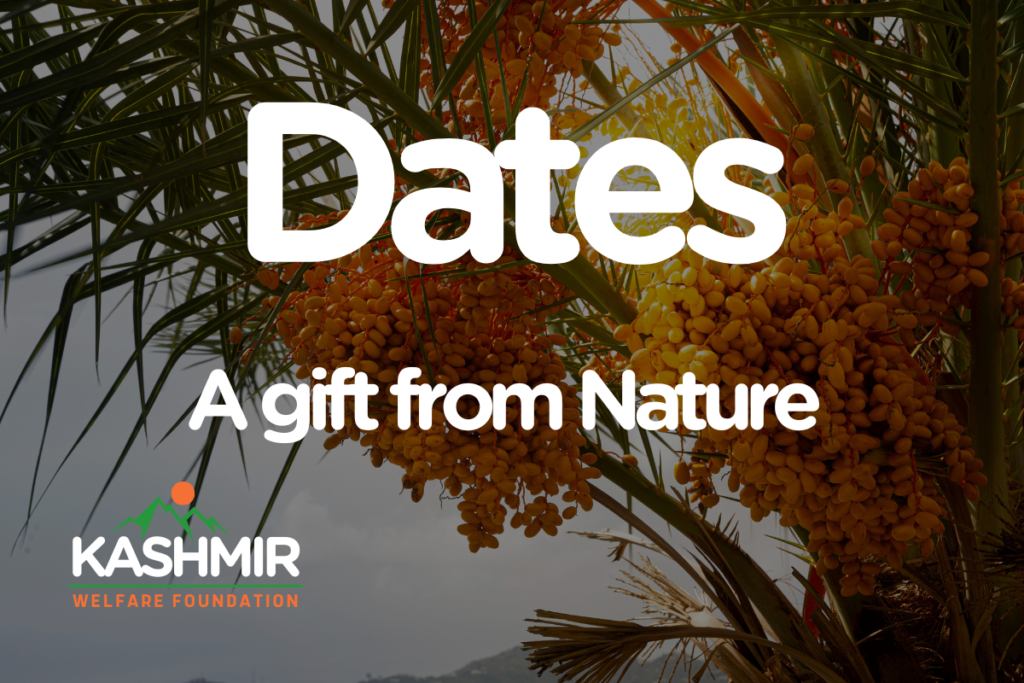
Picture a desert oasis. Sunlight dances on the long fronds of date palms, and clusters of golden-brown fruit hang like jewels beneath the leaves. Date palms thrive where few other crops survive — in heat, sand and wind.
Cultivating dates is both art and patience. Farmers hand-pollinate the female palms by climbing tall trunks and dusting the flowers with pollen, a tradition passed down for centuries. A palm takes six to eight years to bear fruit and nearly twenty to reach full productivity. When harvest season comes, workers ascend the trees with remarkable skill, gathering ripe dates that will later fill our tables. Each tree can yield hundreds of kilograms per year — a miracle born of perseverance.
The Date Palm: A Tree of Blessing
The date palm is not just a plant; it is a symbol of life in the desert. Its deep roots reach underground water, offering shade, fruit and survival in arid lands. Islamic tradition calls it a tree of Paradise.
Every part of it is useful. The fruit nourishes. The leaves weave into baskets and mats. The trunk provides wood for homes and tools. Truly, it is a tree of blessing, sustaining communities for generations.
Dates in Islam: A Fruit of Faith
Few fruits are mentioned as often in the Qur’an as the date. It appears more than twenty times, symbolising sustenance, mercy and abundance. The Prophet (PBUH) loved dates, breaking his fast with them and recommending their benefits.
One of the most beautiful traditions in Islam is breaking the fast in Ramadan with dates. The Prophet (PBUH) used to open his fast with fresh dates, or if none were available, with dried dates or water. This moment of unity — millions of Muslims worldwide taking that first sweet bite — connects hearts across borders and centuries.
The Powerhouse of Health
Beyond their spiritual importance, dates are a treasure of nutrition.
- Instant Energy: Their natural sugars revive the body after fasting or fatigue.
- Digestive Health: Rich in fibre, they ease digestion and prevent constipation.
- Heart Support: High potassium content helps balance blood pressure.
- Brain Function: Antioxidants protect cells and may reduce neurological decline.
- Bone Strength: Calcium, magnesium and phosphorus reinforce healthy bones.
A handful of dates daily can nurture body and soul alike.
Ramadan and the Sweet Symbol of Renewal
When the call to Maghrib echoes and the fast is broken, that first bite of a date feels almost sacred. Soft, sweet and full of meaning, it restores energy and gratitude in equal measure.
Dates are ideal for iftar because they:
- Provide quick natural sugars to revive the body.
- Prepare the stomach gently before the main meal.
- Rehydrate with essential minerals after long hours without food or water.
Across the Muslim world, every iftar table includes a small plate of dates — a tradition that links us with the Prophet’s (PBUH) sunnah and with the global Ummah.
💷 Gift Aid adds 25% extra at no cost to you.
Ethical Choices: The Story Behind the Label
While dates are a symbol of faith and nourishment, not all dates on supermarket shelves tell the same story. Many are grown on land taken from Palestinians and sold under Israeli labels. These products fund industries that profit from occupation and injustice.
As Muslims and conscientious consumers, our purchases carry moral weight. Choosing ethically grown dates is a simple yet powerful way to stand for justice.
How to make the right choice:
- Check labels carefully. Avoid products marked Product of Israel or from companies based in illegal settlements.
- Seek Palestinian brands, especially those from the Jericho region.
- Buy certified fair-trade or ethically sourced dates that ensure fair wages and respect for human rights.
Each purchase becomes a statement of solidarity with those enduring hardship in Gaza and across Palestine.
The Date in Crisis: A Lifeline of Hope
In many war-torn regions, dates are more than food — they are survival. Families in Gaza, Yemen and Syria have relied on them when bread and rice ran out. One mother in Gaza described how, during bombardment, she kept her children alive for days on dates and water alone. Those little fruits became her family’s lifeline.
This is why dates hold such deep emotional and spiritual symbolism. They represent endurance, patience and hope — the same virtues that keep faith alive in times of darkness.
Dates: Nourishment Beyond Borders
The lessons carried by a date go far beyond the palm tree. They remind us that rizq — provision — comes from Allah (SWT), and that every blessing we enjoy carries responsibility. When we eat a date at iftar, we join a chain of gratitude stretching from farmers in desert oases to families across the world who share the same prayer before eating: Bismillah.
For Kashmir Welfare Foundation, this connection between food, faith and dignity inspires our Meals of Mercy Campaign. During Ramadan, thousands of Iftar meals are distributed across Azad Kashmir so that no fasting person is left hungry. Each meal shared echoes the Prophet’s tradition and embodies the mercy symbolised by a single date.
Final Thoughts
Dates are more than a sweet treat. They are faith in edible form — reminders of gratitude, compassion and justice. When we choose ethically sourced dates and share them in the spirit of Ramadan, we are not only nourishing our bodies but honouring the values that define our Ummah.
So the next time you reach for a date, pause and remember its journey — from the hands that grew it to the hearts it feeds. One small fruit. Endless blessings.
💷 Gift Aid adds 25% extra at no cost to you.
Frequently Asked Questions
Why are dates important in Islam?
Dates were loved by the Prophet (PBUH) and are mentioned many times in the Qur’an as symbols of sustenance and blessing.
Why do Muslims break their fast with dates?
Dates quickly restore energy, are gentle on the stomach and follow the sunnah of the Prophet (PBUH).
How can I identify Palestinian or ethical dates?
Look for labels showing origin in Palestine or fair-trade certification, and avoid products marked Product of Israel.
Are dates healthy to eat daily?
Yes. Eaten in moderation, dates offer natural energy, fibre, and minerals that support heart and bone health.
How does Kashmir Welfare Foundation link to this story?
Through its Meals of Mercy Campaign, the foundation provides Iftar meals in Kashmir, continuing the tradition of feeding the fasting with dates and compassion.
