
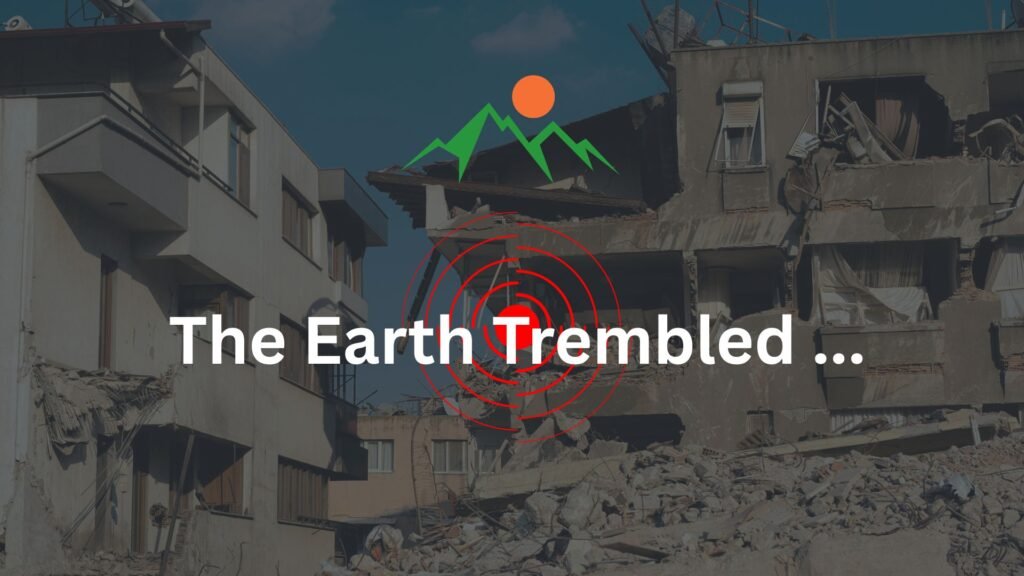
A Peaceful Dawn in Azad Kashmir
It was a calm morning in my village, just north of Muzaffarabad, Azad Kashmir. The valleys glistened with the first light of dawn, dew sparkled on the green fields, and the sound of birdsong filled the crisp mountain air. Life felt serene and ordinary.
Children played by the riverbank, women drew water from the streams, and men prepared for their daily work in the fields. I remember feeling grateful for the simple rhythm of life, completely unaware of the disaster about to strike.
The mountains surrounding us seemed eternal, a comforting presence that had always stood guard over our village. We had lived here for generations, knowing the rivers could flood and the winters could be harsh, but the mountains had always offered a sense of security.
That morning, I never imagined how fragile our lives truly were.
💷 Gift Aid adds 25% extra at no cost to you.
The Earth Shakes: The Moment the World Collapsed
Then, without warning, the ground beneath my feet began to tremble. At first, I thought it was some construction or a landslide, but the vibrations grew stronger and more violent. The entire valley seemed to sway. Houses shook, walls cracked, and the very earth felt alive, rebelling against us.
The mountains that had seemed so protective now felt threatening.
Panic set in instantly. I grabbed my children, shouting for them to hold onto me. Around me, neighbors were screaming, their voices mixing with the thunderous groan of collapsing roofs and falling stones. Trees swayed dangerously, and rocks tumbled down the hillsides.
The air was thick with dust and debris, making it almost impossible to see. In those moments, time seemed to stretch and shrink all at once. Every second felt like a lifetime, every breath a gift.
Witnessing Destruction: Homes Reduced to Rubble
When the shaking finally stopped, a deafening silence settled over the valley. But this silence was not peaceful—it was the silence of devastation. Houses, including my own, were reduced to rubble. Entire neighborhoods had vanished beneath the collapsed roofs and shattered walls. Fields were torn apart, and the rivers, which had nurtured our crops, now carried debris and destruction downstream.
Families wandered aimlessly, calling for loved ones. Children cried out for parents who were nowhere to be seen. The village well, a source of water for decades, had been destroyed.
Food supplies were buried under debris. For many, the reality was terrifying: everything they had known, everything they had built, was gone in a matter of minutes.
The Human Toll: Loss, Grief, and Fear
In the aftermath, the human toll became painfully clear. Friends and neighbors were injured, some severely. Many had lost family members. I remember the heartbreaking sight of parents searching for children beneath collapsed homes. The grief was palpable, the fear of aftershocks relentless.
Water became scarce. Contaminated rivers and broken wells made drinking dangerous. Food supplies were limited. Access to healthcare vanished almost overnight as clinics and hospitals were damaged or overwhelmed.
The most vulnerable, the children, the elderly, and pregnant women faced the highest risk of illness and malnutrition. In those first hours, survival was the only goal, and hope seemed fragile.
Emergency Relief in Kashmir: Reaching Families in Need
Humanitarian aid became our lifeline. Organisations and volunteers rushed to the hardest-hit areas to provide emergency relief. Many charities were not used to doing aid work here so they really struggled to reach deep into the valleys and mountains of Kashmir. This is where the true impact of the earthquake was, but nonetheless, they tried and tried to do whatever they can to make sure people were helped.
I saw relief workers tirelessly digging through rubble, sometimes pulling out survivors with their bare hands. Medical teams treated injuries on the spot, and volunteers distributed essential supplies to those who had lost everything. Every delivery of aid felt like a miracle, bringing hope in the midst of overwhelming despair.
Rebuilding Lives: Homes, Schools, and Livelihoods
Once the immediate danger passed, the long journey of rebuilding began. For us, recovery was not just about reconstructing homes, it was about restoring life itself. Organisations like Kashmir Welfare Foundation provided tools, materials, and guidance to rebuild houses, schools, and community centers. Families worked alongside volunteers to restore what had been lost, brick by brick, with hearts heavy from grief but determined to move forward.
Flooded fields and destroyed crops meant that livelihoods had been wiped out. The organisations distributed seeds, farming tools, and small grants to help families restart their farms and businesses. Slowly, the village came back to life. Children returned to classrooms, farmers tilled their fields, and communities found strength in each other’s resilience.
💷 Gift Aid adds 25% extra at no cost to you.
Protecting Children and Education
Children were among the hardest hit. Schools collapsed, books were lost, and the normalcy of education vanished overnight. Till this day our schools and education system has not been back to normal. Kashmir Welfare Foundation has recently started some projects restoring the old buildings and furniture that was damaged in 2005. By restoring classrooms and distributing books and uniforms, children could continue their education, offering a sense of stability amidst chaos.
Education also offered emotional healing. For children who had witnessed unimaginable destruction, returning to school was a chance to reclaim childhood, to feel safe, and to dream of a future beyond disaster. It reminded all of us that while the earth may tremble, the spirit of learning and hope cannot be destroyed.
Health Challenges After the Earthquake
The destruction left health risks in its wake. Stagnant water from landslides and broken infrastructure led to outbreaks of waterborne diseases such as cholera, typhoid, and dysentery. Mobile medical camps were established to prevent these epidemics, offering vaccinations, first aid, and ongoing support to families recovering from trauma and illness.
Doctors, nurses, and paramedics worked day and night, sometimes under difficult conditions, to treat the sick and injured. Their efforts were vital in saving lives, particularly among children and the elderly. Without immediate medical intervention, the death toll would have been even higher.
The Role of Community Resilience
What struck me most was the resilience of our community. Even in the face of unimaginable loss, people supported one another. Neighbors shared the little they had, comforted grieving families, and worked tirelessly to rebuild homes and infrastructure. People from all over Kashmir stepped in at the country’s deepest crisis.
Environmental Challenges and Long-Term Recovery
The earthquake also highlighted environmental vulnerabilities. Landslides and soil erosion compounded the destruction, making roads and infrastructure unstable. The Kashmir Welfare Foundation invested in environmental restoration, reforestation, and riverbank stabilization, reducing the impact of future natural disasters.
Combining humanitarian aid with environmental action ensured that recovery was not just temporary. Families could rebuild with greater confidence, knowing that steps were being taken to protect their homes and livelihoods from future disasters.
💷 Gift Aid adds 25% extra at no cost to you.
Remembering the 2005 Kashmir Earthquake
Even today, the memory of that morning lingers. The fear, the destruction, and the grief are unforgettable. Yet, the courage, solidarity, and hope we found in each other’s company remain equally vivid. The earthquake claimed tens of thousands of lives, but it also revealed the extraordinary capacity of communities to survive, rebuild, and thrive despite catastrophe.
As the anniversary approaches, I tell my story to honor those who were lost and to remind the world of the ongoing need for preparedness and support. Organizations like Kashmir Welfare Foundation continue to provide emergency relief, rebuild homes, restore livelihoods, and empower communities, ensuring that families are never left alone in the aftermath of disaster.
Kashmir is still suffering from that Earthquake today! We are still rebuilding. We are still strengthening ourselves. It was a major setback.
How You Can Help
Your support can make a life-saving difference. Donations to Kashmir Welfare Foundation provide emergency relief, medical aid, clean water, and long-term reconstruction for families affected by earthquakes and other disasters in Azad Kashmir. Every contribution helps restore hope, protect children, and rebuild communities stronger than before.
💷 Gift Aid adds 25% extra at no cost to you.
