
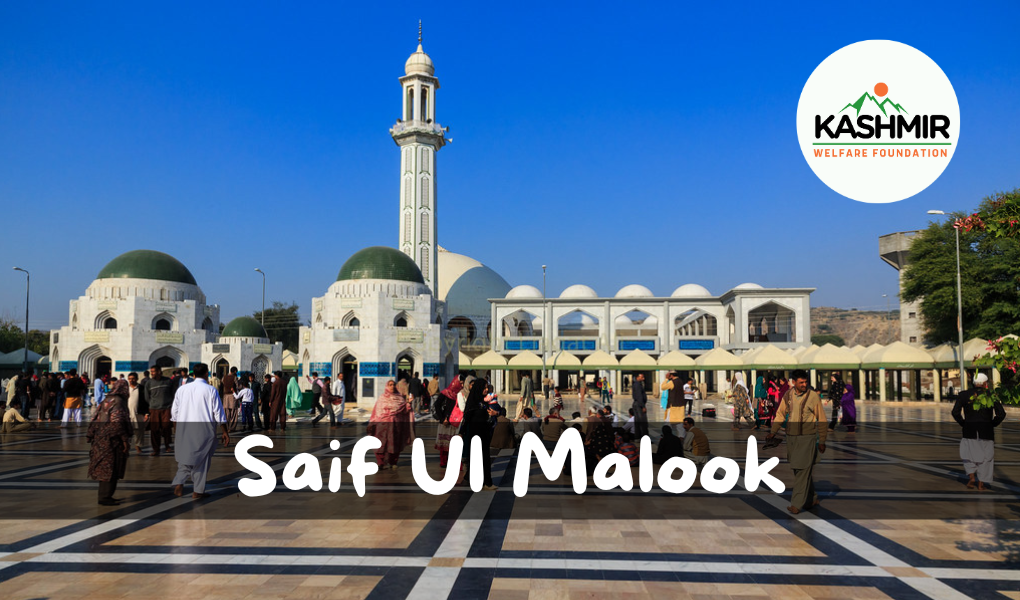
A Poem That Lives in Every Kashmiri Home
“Awwal Hamd sanaa elaahi, jo maalik har harr da.
Us da naam chataaran aala, kise vi maidan na harda.”
First, all praise is for Almighty, the Lord of all.
Whoever remembers His name never loses in any field.
For many Kashmiris, these words are not just poetry. They are memory, identity, and faith. So deeply ingrained are these verses that most cannot even recall the first time they heard them. Recited in fields by shepherds, whispered at village gatherings, and shared in homes, they have become a living inheritance.
This is the opening couplet of Saif ul Malook, the magnum opus of Mian Muhammad Baksh, one of the greatest poets and Sufis of Kashmir. His verses are woven into the fabric of Kashmiri life, guiding people through joy, sorrow, and spiritual yearning.
💷 Gift Aid adds 25% extra at no cost to you.
The Kashmiri Poet-Saint
Mian Muhammad Baksh was born in 1246 AH (1830) in Azad Kashmir. Orphaned at a young age, he endured hardship yet dedicated his life to knowledge, poetry, and spirituality. By the age of 33, in Ramadan of 1279 AH, he completed Saif ul Malook.
Today, he is lovingly remembered as Rumi-e-Kashmir and Arif-e-Kharri, the knower of Allah in Khari. His shrine in Khari Sharif, close to his guide Damri Wala Pir, remains a beacon for seekers. Thousands come each year to pay respects and draw blessings from his resting place.
Saif ul Malook: A Journey of Love and Divine Longing
At first glance, Saif ul Malook tells the enchanting story of Prince Saif, who falls in love with the fairy princess Badi-ul-Jamal. His path is blocked by the White Giant, Deuo Safaid. But this fairytale is only the surface.
The deeper reality is an allegory of the human soul.
- Prince Saif symbolises the seeker of truth.
- Badi-ul-Jamal represents the soul’s longing for purity and divine love.
- The trials and battles mirror the struggles against ego and worldly desires.
- The journey itself is the Sufi path toward Allah.
Through this allegory, Mian Muhammad Baksh teaches that love, patience, and sacrifice lead to spiritual awakening.
Language of the People, Voice of Unity
The language of Saif ul Malook is Potwari/Pahari with Punjabi influences, but it was crafted deliberately to be understood by all. In his own words:
“Ishq nahi puchda zaataan” – Love does not ask about castes.
His poetry blends dialects, reflecting a conscious effort to unite communities across social and linguistic divisions. That is why peasants, shepherds, and labourers know his couplets by heart.
The simplicity of language carries profound depth. Each verse can stand alone, yet together they form over nine thousand couplets — a spiritual cosmos of wisdom and longing.
Verses That Speak to Human Struggles
His poetry goes beyond allegory. It speaks directly to human fears, joys, and trials:
“Roogan wich roog hai dhadha, jis da naam gareebi.
Mushkil vele chadd dende ne, rishtedaar kareebi.”
Of all diseases, the worst is poverty.
In times of trouble, even close relatives walk away.
“Masjid dhade, Mandir dhade, dhaade jo kujh dhainda.
Ek bande da dil na dhaanvi, Sona Rab dillan wich rainda.”
Tear down the mosque, destroy the temple, break all that is fragile.
But never break the heart of a man, for God dwells within.
“Je lakh zobt ibaadat kariye, bin ishq kis kaari.
Jad tak ishq na sadhe tainu, tad tak nabhe na yaari.”
A thousand acts of worship are futile without love.
Until love burns within you, friendship cannot be true.
This blend of the seen and unseen, the ordinary and the divine, is what makes his poetry timeless.
A Living Tradition Across Generations
For centuries, Saif ul Malook has been part of Kashmiri social life. In times of joy, it is recited as thanksgiving. In sorrow, it brings comfort. Gujjar and Bakerwal nomads sing it while grazing in the Pir Panjal.
Artists like Shaukat Ali, Alam Lohar, Arif Lohar, and Sain Zahoor have carried his verses to the world stage. Qawwals like Nusrat Fateh Ali Khan and Abida Parveen gave them new resonance. Today, recordings circulate on mobile phones, ensuring this Kalam remains alive in every household.
Kashmir in His Heart
Mian Muhamamd Baksh never forgot his homeland:
“Mulkan vichon mulk hai sohna, jis da naa Kashmir.
Khari mulk vich vasda sohna, Damriyan wala peer.”
Of all lands, the most beautiful is Kashmir.
And in Khari Sharif resides the beloved Damri Wala Pir.
Through these words, he tied Kashmir’s natural beauty to its spiritual soul.
💷 Gift Aid adds 25% extra at no cost to you.
Legacy and Relevance Today
Though modern times have seen shifts in language and culture, Saif ul Malook continues to offer hope, wisdom, and identity to Kashmiris. It is both heritage and guidance, reminding us that truth, love, and humility always prevail.
As readers, we can keep this legacy alive — by learning, sharing, and supporting projects that protect Kashmiri culture and empower its people.
How You Can Help Preserve Kashmiri Legacy
Just as Saif ul Malook was written for the common people, our work at Kashmir Welfare Foundation serves families, orphans, and widows in need. By giving, you help sustain both faith and culture.
- Give Zakat and fulfil your obligation while uplifting Kashmiri families.
- Offer Sadaqah to share blessings with those in hardship.
- Commit to Regular Giving so support reaches households every month.
Your donation is more than charity. It is part of the Kashmiri story.
💷 Gift Aid adds 25% extra at no cost to you.
Saif Ul Malook FAQ
1. Who was Mian Muhammad Baksh?
He was a Kashmiri Sufi poet and saint, born in Khari Sharif in 1830, known as the “Rumi of Kashmir.”
2. What is Saif ul Malook?
A Sufi allegory written as a love story, symbolising the human soul’s journey toward Allah.
3. Why is Saif ul Malook important in Kashmiri culture?
It is recited in homes, gatherings, and across generations, forming part of Kashmiri identity and spirituality.
4. What language is it written in?
Potwari/Pahari, with Punjabi influences, chosen deliberately so it could be understood by all.
5. How can I help preserve this heritage?
By supporting Kashmir Welfare Foundation’s education and empowerment projects, ensuring Kashmiri culture and wisdom continue to thrive.
💷 Gift Aid adds 25% extra at no cost to you.
