
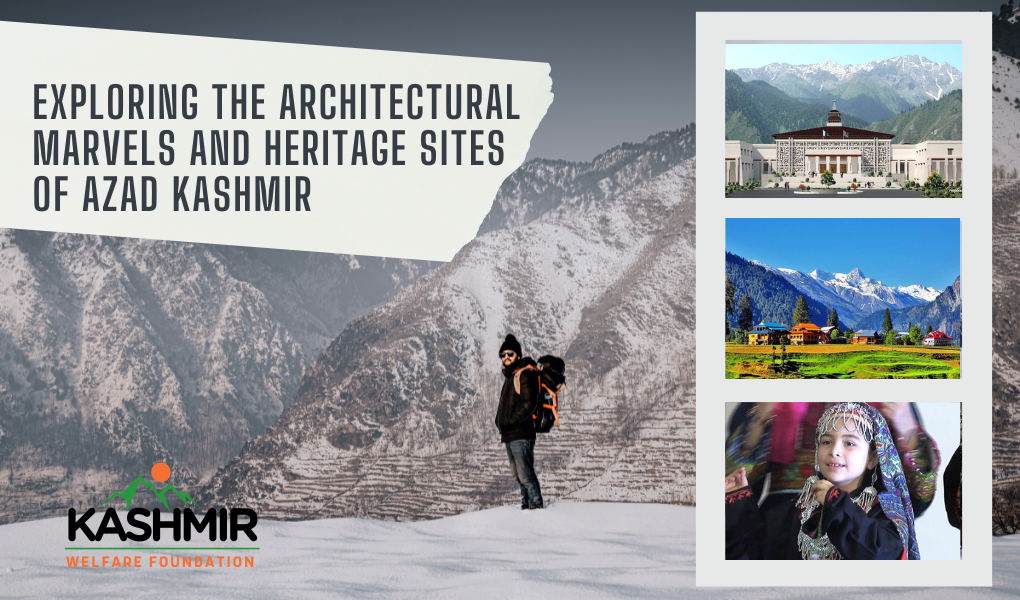
Azad Kashmir, a land of breathtaking landscapes and vibrant traditions, holds within its valleys and mountains an architectural story that spans centuries. Here, history is carved into stone, whispered through sacred shrines, and reflected in the domes of mosques that rise against a backdrop of emerald forests and glacial rivers.
Each structure, from the mighty forts guarding its frontiers to the spiritual sanctuaries of Sufi saints, tells a tale of resilience, artistry, and faith.
This region, often called Paradise on Earth, offers more than scenic beauty — it embodies a cultural dialogue between Hindu, Buddhist, Mughal, and Islamic civilisations. To walk through the ruins of Sharda Peeth or gaze upon the grandeur of the Red Fort in Muzaffarabad is to walk through time itself. The architectural heritage of Azad Kashmir is not merely about stone and mortar — it is about identity, endurance, and belonging.
💷 Gift Aid adds 25% extra at no cost to you.
Forts of Azad Kashmir — Guardians of the Past
Across the rugged terrain of Azad Kashmir, ancient forts stand as silent sentinels of its turbulent history. These monumental structures were once strategic strongholds, safeguarding trade routes and reflecting the might of rulers who understood that architecture could also be power made visible.
The Red Fort (Chak Fort), Muzaffarabad
Rising proudly along the banks of the Neelum River, the Red Fort — or Chak Fort — is a masterpiece of medieval Kashmiri architecture. Commissioned in the 16th century under the Chak dynasty and later expanded by Sultan Muzaffar Khan, the founder of Muzaffarabad, its red sandstone walls tell tales of both war and artistry.
Despite suffering damage from earthquakes and time, its arches and bastions remain a symbol of defiance and elegance. From its ramparts, one can still imagine guards watching over the valleys, protecting a city that would become the beating heart of Azad Kashmir.
Mangla Fort, Mirpur
Standing near the tranquil waters of Mangla Dam, Mangla Fort embodies the region’s strategic and military history. Originally strengthened during the Dogra and British periods, its vantage point overlooking the Jhelum River gave it immense tactical significance. Today, it offers panoramic views of Mangla Lake — a reminder of how heritage and nature coexist in Azad Kashmir’s evolving landscape.
Ramkot Fort — The Floating Castle
Accessible only by boat, Ramkot Fort emerges dramatically from a hilltop surrounded by the blue expanse of Mangla Lake. Built by ancient Hindu rulers and later refurbished by Muslim sultans, it blends early Kashmiri design with Islamic architectural refinements. Its arched gateways, crumbling stairways, and defensive walls speak of centuries of transition — a perfect metaphor for Kashmir’s layered history.
Baghsar Fort — Where History Slept
Nestled in the serene Samahni Valley near the Line of Control, Baghsar Fort once served as a resting place for Mughal emperors. Historical accounts tell us that Emperor Jahangir’s body was temporarily placed here on his final journey from Kashmir. Its high watchtowers, symmetrical arches, and stone corridors evoke Mughal grandeur — yet today it stands peacefully surrounded by nature, a testament to the transience of empires.
Kotli Fort — Echoes of Forgotten Battles
Though weathered by time, Kotli Fort remains a proud relic overlooking the Poonch River. Once a stronghold during local conflicts, it offers insight into the martial and cultural identity of the region’s past rulers. Visitors walking through its ruins find themselves transported to an era where strategy and survival intertwined with artistry.
Mosques — The Spiritual Soul of Azad Kashmir
Faith has always been the heartbeat of Kashmiri life, and nowhere is it expressed more beautifully than in the region’s mosques. Their domes, calligraphy, and courtyards are more than architectural elements — they represent devotion, unity, and divine artistry.
Masjid Haramain Sharifain, Muzaffarabad
Gleaming with white marble and crowned with elegant minarets, Masjid Haramain Sharifain is one of Muzaffarabad’s most magnificent landmarks. Its serene design, inspired by the holy mosques of Makkah and Madinah, offers worshippers a place of reflection amidst the city’s bustle. At night, its illuminated domes cast a tranquil glow over the Neelum River — a symbol of spiritual light guiding the community.
Jamia Masjid Mangla, Mirpur
Overlooking the Mangla Dam, Jamia Masjid Mangla stands as a fusion of modern craftsmanship and classical Islamic geometry. Its expansive courtyard and graceful arches invite both worship and wonder. The mosque also acts as a centre for gatherings, where spirituality meets community life.
Pir Chinasi Mosque — Where Faith Meets the Sky
High in the hills above Muzaffarabad, near the shrine of Hazrat Shah Hussain Bukhari, sits the Pir Chinasi Mosque. Encircled by alpine forests and the snow-capped Himalayas, it feels as though heaven and earth converge here. The mosque is both a destination for pilgrims and a retreat for those seeking solitude in divine creation.
Jamia Masjid Kotli
In Kotli city, this vibrant mosque stands as a pillar of community unity. Its architecture, featuring patterned domes and intricate motifs, represents the living tradition of Kashmiri Islamic design — one that continues to evolve yet remains deeply rooted in faith.
💷 Gift Aid adds 25% extra at no cost to you.
Shrines of the Saints — The Sufi Heartbeat of Kashmir
Azad Kashmir’s spiritual heritage is profoundly shaped by Sufism. Its valleys echo with verses of devotion, and its shrines serve as sanctuaries of love, healing, and peace.
Pir Chinasi — The Summit of Spirituality
Atop the Pir Chinasi peak, the shrine of Shah Hussain Bukhari stands as both a sacred space and a symbol of enduring faith. Thousands visit each year to seek blessings and inspiration, and the journey itself — through misty forests and winding mountain roads — feels like a pilgrimage of the soul.
Khari Sharif — The Valley of Saints and Poets
In Mirpur, the twin shrines of Pir Shah Ghazi and Mian Muhammad Bakhsh form one of the most revered spiritual sites in Azad Kashmir. Mian Muhammad Bakhsh, the Sufi poet who penned Saif-ul-Maluk, gave voice to a timeless message of divine love and human humility. The annual Urs festival transforms Khari Sharif into a living celebration of Kashmiri poetry, culture, and spirituality.
Baba Shadi Shaheed, Bhimber
The shrine of Baba Shadi Shaheed in Bhimber continues to attract devotees who come seeking healing and guidance. His legacy as a saint and martyr lives on through oral histories and annual gatherings that reaffirm Kashmir’s connection to its spiritual roots.
💷 Gift Aid adds 25% extra at no cost to you.
Archaeological Treasures — Unearthing the Ancient Soul of Kashmir
Beneath the soil of Azad Kashmir lies a deeper story — one that predates kingdoms and conquerors. Archaeological discoveries across the region reveal ancient settlements, temples, and inscriptions that trace the evolution of civilisation here.
Sharda Peeth — Temple of Knowledge
In the Neelum Valley lies Sharda Peeth, the legendary temple and university once dedicated to the Hindu Saraswati. Established around the 9th century, it drew scholars from across South Asia. Though now in ruins, its carved stones and riverside setting exude an aura of sacred scholarship. Sharda Peeth remains a symbol of Kashmir’s historical pluralism — a bridge between faiths, ideas, and eras.
Baghsar Ruins and the Mughal Passage
Close to Baghsar Lake, remnants of Mughal-era structures tell stories of imperial journeys. Emperor Jahangir’s body was reportedly rested here, linking the valley forever with Mughal history. These ruins also highlight how architecture served both function and ceremony, marking the routes of emperors and merchants alike.
Ancient Temples of Mirpur and Bhimber
Scattered across the plains of Mirpur and Bhimber are the remains of old Hindu temples — silent witnesses to a time when trade, faith, and art thrived together. Their sculpted stones still bear motifs of lotus flowers and celestial beings, whispering of an age long past yet not forgotten.
Buddhist Traces and Ashokan Edicts
Near the Kohala bridge route toward Muzaffarabad, one finds traces of the Ashokan rock edicts — inscriptions proclaiming Buddhist teachings of compassion and peace. These artefacts connect Azad Kashmir to the wider subcontinental story of moral and spiritual evolution under Emperor Ashoka.
Preserving the Past, Empowering the Future
Fact: According to the Azad Jammu & Kashmir Tourism Department (2024), over 60% of historical sites in AJK remain at risk due to neglect, natural erosion, or lack of restoration funding.
Why It Matters: These monuments are not merely relics; they are living classrooms for future generations. By preserving them, we safeguard the collective identity and continuity of Kashmiri culture.
Your Impact: When you support the initiatives of the Kashmir Welfare Foundation, you’re not only uplifting communities through education and healthcare — you’re helping preserve the heritage that defines them. Every donation contributes to a more resilient and culturally rich Kashmir.
Gift Aid: Double Your Support at No Extra Cost
If you are a UK taxpayer, remember that your donation to the Kashmir Welfare Foundation can go even further through Gift Aid. For every £1 you give, we can claim an additional 25p from HMRC — at no cost to you.
Your generosity doesn’t just rebuild lives; it preserves history, empowers women and children, and restores hope across the valleys of Azad Kashmir.
💷 Gift Aid adds 25% extra at no cost to you.
Frequently Asked Questions (FAQs)
1. Why is Azad Kashmir considered culturally significant?
Because it stands at the crossroads of civilisations — Hindu, Buddhist, Mughal, and Islamic — each leaving behind remarkable architectural and spiritual legacies.
2. What is the most famous historical site in Azad Kashmir?
The Red Fort of Muzaffarabad and Sharda Peeth are among the most prominent, representing both military and scholarly excellence.
3. Can tourists visit these sites safely today?
Yes. Most heritage sites are open to visitors, and infrastructure improvements are gradually enhancing accessibility, especially in Muzaffarabad, Mirpur, and Neelum Valley.
4. Are restoration efforts underway?
Limited government and NGO-led initiatives exist, but greater international and diaspora support is vital for large-scale preservation projects.
5. How can I contribute to heritage preservation in Azad Kashmir?
You can support community-driven conservation and education initiatives by donating to the Kashmir Welfare Foundation, which ensures transparent, research-led interventions that benefit both heritage and humanity.
💷 Gift Aid adds 25% extra at no cost to you.
