You have 1 item in your cart

Sub Total :£100.00
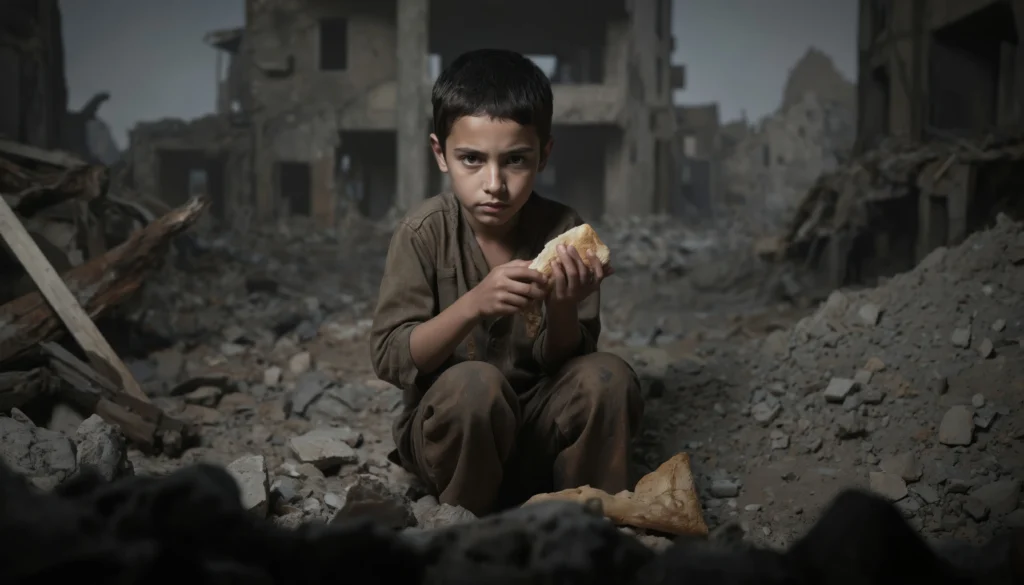

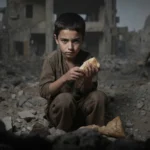



A child should never have to choose between hunger and learning. They should never sit in a classroom distracted by an empty stomach, unable to concentrate because their body simply does not have the nutrition it needs. Yet across Azad Kashmir, this is the reality facing thousands of children every day.
Malnutrition is one of the most serious challenges affecting vulnerable communities throughout the region. It impacts health, education, development, and future opportunities. While many people think of malnutrition as simply not having enough food, the reality is much more complex. It affects how children grow, learn, fight illness, and build their future.
Your support can help change that.
By providing nutritious meals, nutrition support, and early intervention programmes, we can help vulnerable children grow stronger, healthier, and more capable of reaching their full potential.
Together, we can help ensure that no child is left behind because of hunger.
Hunger is not always visible.
Many children attend school every day looking healthy on the surface. They smile, play with friends, and participate in lessons. Yet beneath that appearance, many are suffering from nutritional deficiencies that affect every aspect of their development.
Across Azad Kashmir, food insecurity remains a serious issue. Research shows that more than half of the population experiences some form of food insecurity, while significant numbers of children suffer from undernourishment and stunted growth.
For struggling families, every day involves difficult decisions. Limited income must cover food, fuel, rent, clothing, healthcare, and education. When money runs short, nutritious food is often one of the first sacrifices. Families buy cheaper alternatives, reduce meal sizes, or skip meals altogether in order to survive.
The result is a hidden crisis affecting thousands of children across the region.
A crisis that often goes unnoticed until the damage has already begun.
Malnutrition affects far more than physical hunger.
A child who does not receive proper nutrition cannot develop in the same way as a child whose dietary needs are met. Their body lacks the vitamins, minerals, and nutrients required for healthy growth and development.
Over time, this can lead to weakened immunity, frequent illness, slower physical growth, reduced concentration, and developmental delays. Children who are malnourished often struggle to participate fully in school because their bodies are focused on survival rather than learning.
The effects can continue for years.
Educational achievement falls. Confidence declines. Future employment opportunities become harder to access. The cycle of poverty becomes even more difficult to break.
This is why preventing malnutrition is not simply about feeding children today.
It is about protecting their future.
Malnutrition rarely has a single cause.
For many families in Azad Kashmir, poverty is the starting point. Low incomes limit access to nutritious food, particularly as food prices continue to rise. Larger households often face even greater pressure as available resources must be stretched across more family members.
Climate change is creating additional challenges. Unpredictable weather patterns, floods, landslides, and changing agricultural conditions are affecting food production across the region. When crops fail or food prices rise, vulnerable families feel the impact first.
Poor access to healthcare, maternal malnutrition, illness, and inadequate nutrition during early childhood also contribute to the problem. Research conducted within Azad Kashmir has identified poverty, rural isolation, household conditions, and preventable illnesses as major risk factors associated with severe acute malnutrition in children.
These challenges are interconnected.
And they require practical solutions.
One of the most visible effects of malnutrition appears inside the classroom.
Teachers often notice the signs before anyone else.
Children become tired before lessons have properly begun. Concentration drifts. Participation decreases. Attendance becomes inconsistent. Academic performance starts to decline.
These children are not lacking intelligence.
They are lacking nutrition.
A hungry child cannot focus on mathematics when they are worried about their next meal. They cannot fully engage with lessons when their body is operating without the energy it needs to function properly.
Education remains one of the most effective ways to break the cycle of poverty.
But education becomes significantly harder when hunger enters the classroom.
That is why nutrition and education must go hand in hand.
Zain was struggling long before anyone understood why.
His teachers noticed that he was often absent. When he did attend school, he seemed tired, withdrawn, and unable to focus on lessons. Despite showing clear potential, he was falling behind his classmates.
The reason eventually became clear.
Zain was frequently going without adequate food.
His family faced financial hardship and could not always provide regular meals. Some days he arrived at school having eaten very little. On other days, he had not eaten properly since the previous evening.
The impact on his education was immediate.
After receiving regular nutritional support through our school programme, everything began to change. His attendance improved. His concentration returned. His confidence grew. His academic progress began to recover.
Today, Zain has hope again.
His story is not unique.
There are many more children facing similar challenges.
And together, we can help them too.
The best way to tackle malnutrition is to prevent it before it reaches crisis point.
Early intervention can make an enormous difference in a child’s life. Providing access to nutritious meals, monitoring children’s wellbeing, and supporting vulnerable families helps reduce the risk of severe malnutrition developing.
When children receive proper nutrition consistently, their health improves. They are more resistant to illness. Their attendance at school becomes more stable. Their educational outcomes improve. Their confidence grows.
Prevention is also significantly more effective than trying to reverse severe malnutrition after it has already taken hold.
By identifying vulnerable children early and providing nutritional support, we can help protect their development and create stronger foundations for the future.
This is why your support matters so much.
A school meal is about far more than food.
For many children, it represents stability. It provides reassurance that at least one nutritious meal will be available that day. It allows them to focus on learning instead of worrying about hunger.
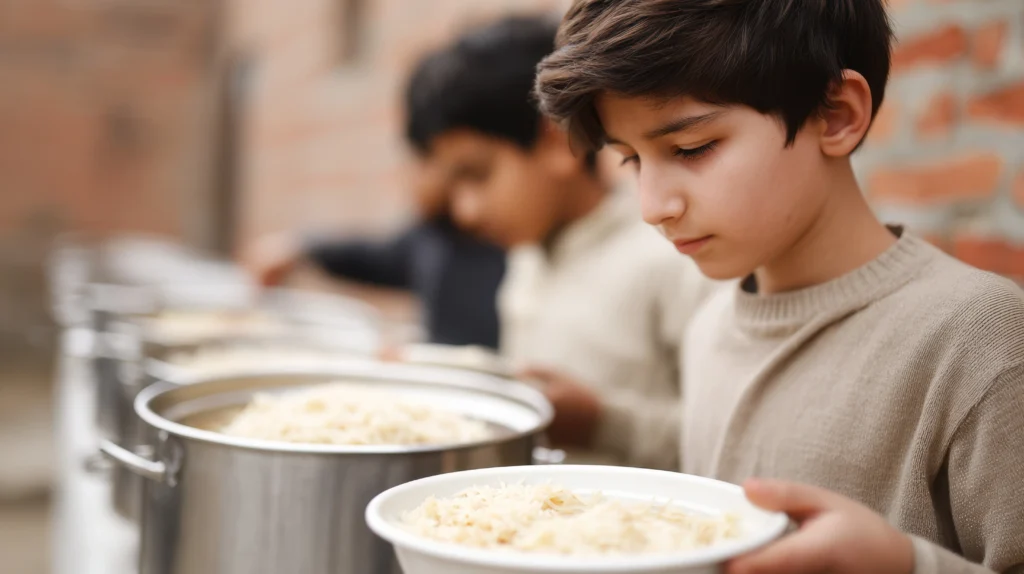
Our school meals programme provides nutritious food to children attending our school in Shah Kot, located on the Line of Control in Azad Kashmir. These meals are prepared locally and designed to provide essential nutrition that supports healthy growth and development.
The impact extends beyond the individual child.
Families facing financial pressure receive valuable support. School attendance improves. Educational outcomes strengthen. Communities become more resilient.
Every meal delivered represents an investment in a child’s future.
And every child fed represents another step towards breaking the cycle of poverty.
Children do not experience malnutrition in isolation.
Their wellbeing is directly connected to the wellbeing of their families.
That is why our approach goes beyond providing meals alone. We work to support vulnerable households through food assistance, emergency relief, healthcare initiatives, and community development projects that address some of the underlying causes of food insecurity.
When families become stronger, children become stronger.
When parents face fewer financial pressures, they are better able to support their children’s education and wellbeing.
Long-term change requires long-term solutions.
By helping entire communities become more resilient, we can reduce the conditions that allow malnutrition to develop in the first place.
The difference your donation can make is remarkable.
A relatively small contribution can help provide nutritious meals that support healthy development and educational achievement. It can help identify vulnerable children before severe malnutrition develops. It can help families facing genuine hardship continue supporting their children’s education.
Most importantly, it can help create opportunities.
A child who receives proper nutrition is more likely to remain in school, perform better academically, and build a brighter future for themselves and their family.
Your support does not simply provide food.
It provides hope.
It provides opportunity.
It provides the foundation upon which a child can build their future.
Malnutrition does not pause.
Every day that passes without support is another day when vulnerable children fall further behind. Growth cannot be delayed. Development cannot be postponed. Childhood does not wait.
The earlier we intervene, the greater the impact we can make.
Every meal delivered today helps prevent problems tomorrow.
Every child supported today has a greater chance of succeeding in the future.
Every donation received today helps us reach another vulnerable child before their situation becomes more serious.
This is why action now matters.
Because every child deserves the chance to grow, learn, and thrive.
No child should have to learn while hungry.
No child should see their future limited because they lacked access to proper nutrition.
No child should face the devastating consequences of preventable malnutrition.
Together, we can change that.
Your donation helps provide nutritious meals, nutrition support, and life-changing assistance to vulnerable children across Azad Kashmir. It helps tackle hunger, prevent malnutrition, strengthen education, and create brighter futures for the next generation.
Today, you can help a child grow stronger.
Today, you can help a child learn.
Today, you can help a child build a future beyond poverty.
Donate today and help end child malnutrition in Kashmir.
Child malnutrition occurs when a child does not receive enough nutrients, vitamins, minerals or calories needed for healthy growth and development. Malnutrition can lead to stunted growth, weakened immunity, poor concentration and long-term health problems. Across Kashmir and Pakistan, child malnutrition remains one of the biggest barriers preventing children from reaching their full potential.
Malnutrition is a significant challenge across Azad Kashmir and Pakistan. Many families face food insecurity due to poverty, rising food costs, unemployment and climate-related challenges. Thousands of children lack access to regular nutritious meals, increasing the risk of stunted growth, illness and poor educational outcomes. Early intervention is critical to protecting vulnerable children.
Child malnutrition in Kashmir is often caused by poverty, food insecurity, unemployment, large household sizes, rising living costs and limited access to healthcare. Climate change, floods, landslides and harsh winters can also reduce food availability. Many families simply cannot afford nutritious diets, leaving children vulnerable to nutritional deficiencies and poor health.
A malnourished child often struggles to concentrate, retain information and participate fully in lessons. Hunger reduces energy levels, affects memory and increases school absences due to illness. Children who receive regular nutritious meals are more likely to attend school consistently, achieve better results and remain engaged with their education.
Common signs of malnutrition include low energy, frequent illness, poor concentration, weight loss, slow growth, developmental delays and reduced school attendance. Some children may appear healthy externally whilst still suffering from nutritional deficiencies. This is why early identification and regular nutritional support are essential for protecting children's health and future development.
Kashmir Welfare Foundation tackles child malnutrition through direct grassroots intervention. We provide daily nutritious meals to vulnerable children, monitor those most at risk, support struggling families and work directly within communities. Because our teams are based on the ground in Azad Kashmir, we can identify needs quickly and provide practical support where it is needed most.
School meals provide children with consistent access to nutritious food during the school day. For some pupils, this may be the most substantial meal they receive. School feeding programmes improve nutrition, strengthen immunity, increase attendance, enhance concentration and help children perform better academically whilst reducing the long-term effects of hunger.
Our programme does more than feed children. By providing meals at school, we reduce financial pressure on struggling households and give parents confidence that their children will receive nutritious food. This encourages continued education, improves wellbeing and allows families to focus limited resources on other essential household needs.
Yes. Most cases of child malnutrition can be prevented through early intervention, nutritious meals, healthcare support, food assistance and community-based programmes. By identifying vulnerable children early and ensuring they receive adequate nutrition, we can prevent severe malnutrition, improve health outcomes and help children reach their full potential.
Kashmir Welfare Foundation operates directly within the communities we serve. We know the children, families and schools receiving support. Our grassroots approach ensures donations create immediate and measurable impact. Your support helps provide nutritious meals, improve educational outcomes, prevent malnutrition and give vulnerable children across Azad Kashmir a healthier future.



Donate to help prevent child malnutrition in Kashmir. Support nutritious meals, child health, education and…